

La energía solar es una fuente de energía renovable que utiliza la energía del sol para generar electricidad. Como alternativa limpia y sostenible a los combustibles fósiles, es cada vez más popular entre los propietarios de viviendas y las empresas. La energía solar ofrece numerosas ventajas, como facturas de electricidad más bajas, menos emisiones de carbono y mayor independencia energética. Sin embargo, también existen retos, como el coste inicial de la instalación y la dependencia de la luz solar. En general, la energía solar es una tecnología prometedora que contribuye significativamente a un futuro sostenible.
¿Cómo funciona la electricidad solar? Aspectos básicos de la energía solar que debe conocer
Comprender los fundamentos de la energía solar es crucial para entender sus principios de funcionamiento y sus ventajas. La energía solar se aprovecha de la radiación del sol, lo que la convierte en una alternativa limpia y sostenible a las fuentes de energía convencionales, como los combustibles fósiles. El proceso de conversión implica varios pasos. Inicialmente, los paneles solares o las tejas solares captan la luz solar. Los paneles solares están formados por unidades más pequeñas llamadas células fotovoltaicas (FV). Estas células, a menudo hechas de silicio como el que se utiliza en los chips de ordenador, pueden convertir la luz solar en electricidad.
Existen varios tipos de sistemas de energía solar, siendo los más comunes los paneles y las tejas solares. Los paneles solares son grandes placas planas que se instalan en los tejados o en el suelo en espacios abiertos. Están formados por conjuntos de células fotovoltaicas que generan electricidad cuando incide sobre ellos la luz solar. En cambio, las tejas solares están diseñadas para parecerse a las tejas normales y pueden integrarse en la estructura existente del tejado. Estas tejas contienen células fotovoltaicas y tienen la doble función de proteger de la intemperie y generar electricidad.
¿Cómo funcionan los paneles solares y las tejas solares?
Los paneles solares y las tejas solares son dos métodos populares para aprovechar la energía del sol y convertirla en energía utilizable. Veamos cómo funciona cada tecnología.
¿Cómo funcionan los paneles solares?
Los paneles solares, también conocidos como paneles fotovoltaicos (FV), constan de múltiples células solares fabricadas con materiales semiconductores, normalmente silicio. Las células se conectan en serie, y la electricidad generada se convierte de corriente continua (CC) a corriente alterna (CA) mediante un inversor, lo que la hace apta para alimentar hogares y empresas.
¿Cómo funcionan las tejas solares?
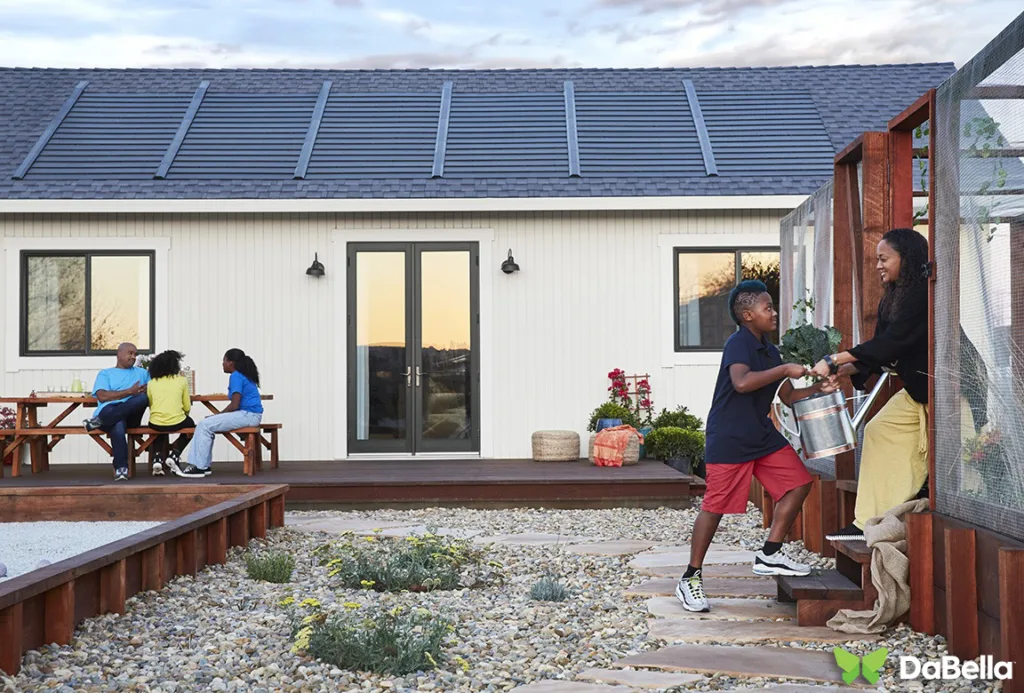
Las tejas solares, también conocidas como tejas solares, combinan a la perfección con los materiales tradicionales de los tejados, ofreciendo una opción estéticamente más agradable para la generación de energía solar. Las tejas solares funcionan de forma similar a los paneles solares, pero están integradas en el propio tejado. Cada teja solar contiene células fotovoltaicas que captan la luz solar y la convierten en electricidad, que puede alimentar partes de su casa o almacenarse en una batería para su uso posterior.
Ventajas de la energía solar
La energía solar ofrece numerosas ventajas, lo que la convierte en una opción atractiva tanto para los propietarios de viviendas como para las empresas.
Ante todo, la energía solar aporta importantes beneficios medioambientales. A diferencia de las fuentes de energía tradicionales, como el carbón o el gas natural, la energía solar genera electricidad sin emisiones nocivas ni contribuye a la contaminación atmosférica. Al aprovechar la energía del sol, los paneles solares ayudan a reducir las emisiones de gases de efecto invernadero y a combatir el cambio climático.
Además de los beneficios medioambientales, la energía solar también aporta ventajas económicas. Instalar paneles solares puede suponer un ahorro sustancial en la factura de la luz. Como la energía del sol es gratuita, generar electricidad a partir de energía solar puede reducir considerablemente los costes mensuales de los servicios públicos. Además, muchos estados ofrecen incentivos, créditos fiscales y reembolsos para fomentar la adopción de sistemas de energía solar, lo que los hace aún más rentables.
Otra ventaja de la energía solar es la independencia y seguridad que proporciona. Esto no sólo reduce el riesgo de cortes de electricidad, sino que también protege contra el aumento de los costes energéticos. Con la energía solar, los propietarios obtienen el control sobre su producción y consumo de energía, lo que garantiza una fuente de energía estable y fiable.
Desventajas de la energía solar
Aunque la energía solar tiene muchas ventajas, también presenta algunos inconvenientes que hay que tener en cuenta. Entender estos inconvenientes puede ayudarte a tomar una decisión informada sobre si la energía solar es la opción adecuada para ti.
Uno de los principales inconvenientes de la energía solar es el coste inicial y el rendimiento de la inversión. Aunque los paneles solares se han vuelto más asequibles con el paso de los años, el coste inicial de la instalación de un sistema de energía solar puede seguir siendo significativo. Sin embargo, es importante tener en cuenta que el ahorro a largo plazo en las facturas de energía puede compensar esta inversión inicial. Además, existen diversas opciones de financiación e incentivos para hacer más accesible la energía solar.
Otra desventaja es la intermitencia de la energía solar y la necesidad de almacenarla. Los paneles solares sólo generan electricidad cuando brilla el sol, lo que significa que no pueden producir energía durante los días nublados o por la noche. Para superar esta limitación, se utilizan sistemas de almacenamiento de energía, como las baterías, que almacenan el exceso de energía generada durante los periodos soleados para utilizarla cuando no hay sol. Sin embargo, estos sistemas de almacenamiento pueden aumentar el coste total de un sistema de energía solar.
Por último, la energía solar depende de la luz solar y de las condiciones meteorológicas. Si vive en una zona con frecuentes días nublados o lluviosos, la eficiencia de sus paneles solares puede verse reducida. Del mismo modo, durante los meses de invierno, con menos horas de luz, la producción de energía solar puede ser menor. Es importante tener en cuenta su ubicación geográfica y el clima a la hora de evaluar la idoneidad de la energía solar para sus necesidades.
A pesar de estas desventajas, la energía solar sigue siendo una fuente de energía limpia y renovable que puede ayudar a reducir las emisiones de carbono y disminuir los costes energéticos con el tiempo.
¿Cómo funciona la energía solar fotovoltaica?
Los paneles solares, también conocidos como paneles fotovoltaicos (FV), son el componente principal de los sistemas de energía solar. Funcionan convirtiendo la luz solar en electricidad mediante un proceso denominado efecto fotovoltaico.
La construcción de células fotovoltaicas es un aspecto crucial de la tecnología solar. Cada panel o teja solar está formado por numerosas unidades pequeñas llamadas células fotovoltaicas. Estas células suelen estar hechas de semiconductores, como el silicio, que tienen propiedades especiales que les permiten convertir la luz solar en energía eléctrica.
Varios factores afectan a la eficiencia y el rendimiento de los paneles solares. Un factor crucial es la calidad de las células fotovoltaicas utilizadas. Las células de mayor calidad pueden convertir un mayor porcentaje de luz solar en electricidad. Otro factor es la orientación e inclinación de los paneles solares. Colocar correctamente los paneles frente al sol maximiza su exposición a la luz solar. Además, factores externos como la sombra de árboles o edificios pueden reducir la eficiencia de los paneles.
Ventajas y consideraciones para la instalación
El calentamiento solar del agua ofrece varias ventajas. Reduce los costes energéticos al utilizar la fuente de energía gratuita y renovable del sol. También ayuda a reducir las emisiones de gases de efecto invernadero y la dependencia de los combustibles fósiles. Además, los sistemas solares de calentamiento de agua tienen una larga vida útil y requieren un mantenimiento mínimo. Sin embargo, hay que tener en cuenta algunas consideraciones a la hora de instalar un sistema solar de calentamiento de agua, como la disponibilidad de luz solar, el tamaño del sistema necesario y los costes iniciales de instalación.
Al aprovechar la energía del sol, los sistemas de calentamiento solar de agua proporcionan una forma sostenible y eficiente de calentar el agua, ofreciendo ventajas tanto medioambientales como económicas. Si está interesado en explorar las opciones de calentamiento solar de agua para su hogar o negocio, póngase en contacto con DaBella hoy mismo para obtener asesoramiento experto y soluciones solares de alta calidad.
FAQ’s: Solar Energy
Our most frequently asked questions regarding homeowners questions about solar options for their homes:
Why is my electric bill so high when I have solar panels?
Your electric bill may remain high for several reasons. Your system might be undersized for your actual energy consumption, or your usage may have increased since installation. Seasonal factors reduce solar production in winter when heating demands peak. System performance issues like shading, dirty panels, or inverter problems can cut generation significantly. Many utilities charge fixed connection fees regardless of solar production, and time-of-use rates mean you’re buying expensive evening power when panels aren’t producing. Net metering policies may also compensate your excess solar at lower rates than you pay for grid electricity. Check your monitoring system to verify production levels and contact your installer if output seems abnormally low.
What is the major disadvantage of solar energy?
The primary disadvantage is intermittent generation combined with high upfront costs. Solar panels only produce electricity when sunlight is available—nothing at night and reduced output during cloudy weather or winter. This requires either grid connection for backup, expensive battery storage, or accepting power gaps. Initial installation costs typically range from $15,000-$30,000 before incentives, creating a significant financial barrier despite long-term savings. Solar production also peaks midday when many households use minimal electricity, while evening demand requires grid power purchases.
Do solar panels work in winter?
Yes, solar panels work in winter but produce less electricity. Shorter days, lower sun angles, and frequent cloud cover reduce output by 40-60% compared to summer months. Snow coverage temporarily blocks production until it melts or is cleared. However, cold temperatures actually improve panel efficiency—they perform better in cold, sunny conditions than hot summer weather. Winter production is sufficient to offset some electricity usage but rarely meets full household demand, requiring grid power to supplement the shortfall during the season when heating needs are highest.
What is the downside to having solar panels?
Key downsides include high initial costs ($15,000-$30,000 before incentives), intermittent power generation requiring grid backup or batteries, roof maintenance complications, potential roof damage during installation or removal, reduced home sale appeal to some buyers, system degradation over time (typically 0.5-1% annually), and ongoing maintenance requirements. Panels add complexity to roof repairs or replacements, which become significantly more expensive. Net metering policies are becoming less favorable in many areas, reducing financial returns. HOA restrictions may limit installation options, and shading from trees or nearby structures can severely impact performance.
Can a house run 100% on solar?
Yes, but it requires significant investment and careful planning. A house can run entirely on solar with properly sized panels and battery storage systems to provide power during nighttime and cloudy periods. Battery systems add $10,000-$20,000+ to installation costs. The system must be oversized to generate excess electricity during sunny periods for battery charging. Most truly off-grid homes require backup generators for extended low-sun periods. Achieving 100% solar typically means reducing energy consumption through efficiency upgrades, as oversizing systems for worst-case scenarios becomes prohibitively expensive. Grid-connected homes with net metering can achieve net-zero annual consumption more affordably by exporting excess summer production to offset winter imports, though they’re not technically 100% solar-powered at all times.
Póngase en contacto con DaBella si está interesado en las tejas solares
Si usted está considerando la energía solar para su hogar en Portland, Vancouver, o California DaBella está aquí para ayudarle a tomar la decisión correcta. Estamos orgullosos de ofrecer las tejas solares Timberline de GAf, una solución revolucionaria que integra a la perfección la energía solar en su tejado.
Las tejas solares están diseñadas para tener el mismo aspecto que las tejas normales, por lo que se integran perfectamente en la estética de su casa. Son una excelente opción para los propietarios que desean aprovechar la energía del sol sin necesidad de paneles solares voluminosos. Las tejas solares timberline de GAF también vienen con una garantía de 25 años en la producción solar.
Con las tejas solares Timberline de GAf, podrá disfrutar de las ventajas de la energía solar manteniendo la belleza de su tejado. Estas tejas están fabricadas con materiales de alta calidad y tecnología solar avanzada, lo que garantiza un rendimiento óptimo y una larga vida útil.
Si está interesado en obtener más información sobre las tejas solares y su funcionamiento, póngase en contacto con DaBella hoy mismo. Nuestro equipo de expertos le proporcionará toda la información que necesita y le guiará a través del proceso. Póngase en contacto con nosotros hoy en 844-DaBella para programar una consulta. Permítanos ayudarle a transformar su hogar en una fuente de energía limpia.