
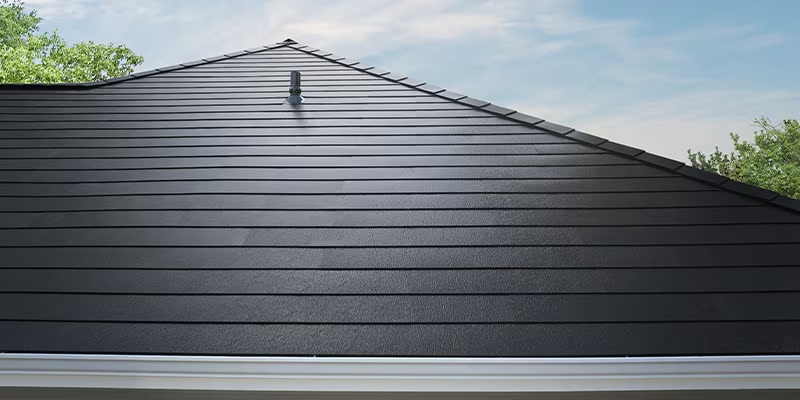
Si alguna vez has mirado hacia arriba a un tejado metálico y has observado lo que parecen ser sutiles ondulaciones o ondulaciones en una superficie de paneles que, por lo demás, es plana, eso es el «efecto lata de aceite». Se trata de un fenómeno habitual en el sector de los tejados metálicos, y conocer las causas del «efecto lata de aceite» y cómo solucionarlo te ayudará a tomar decisiones más informadas a lo largo de todo el proceso de instalación del tejado.
¿Qué es el «oil canning»?
El «oil canning» en un tejado metálico se define como una ondulación perceptible en productos metálicos planos de poco espesor laminados en frío. Se trata de una característica inherente a los paneles metálicos y puede aparecer en cualquier tipo de metal utilizado en la construcción de cubiertas, incluidos el acero, el aluminio, el cobre y el zinc. La ondulación suele ser más visible en las zonas amplias y planas entre las juntas de los paneles, y su aspecto puede variar significativamente en función del ángulo de visión, la hora del día, la estación del año y la cantidad de luz solar directa que incide sobre la superficie.
Una distinción importante que hay que tener en cuenta es que el efecto «oil canning» es un problema estético, no estructural. No compromete la impermeabilidad, la durabilidad ni el rendimiento a largo plazo de un sistema de cubierta metálica. Por este motivo, la mayoría de las garantías de pintura, sustrato y estanqueidad no cubren el efecto «oil canning» como defecto reclamable. Aunque el ondulado pueda ser visible a simple vista, un panel que presente este efecto sigue funcionando exactamente como está previsto.
Causas del efecto «oil canning» en los tejados metálicos
El «oil canning» no tiene una única causa principal, lo que contribuye en parte a que resulte tan difícil de eliminar por completo. Puede originarse durante la fabricación, el almacenamiento, el transporte o la instalación y, en muchos casos, concurren simultáneamente varios factores que contribuyen a su aparición.
Durante el proceso de producción, pueden producirse tres condiciones específicas de tensión en el metal: una condición de «centro completo», en la que el centro de la chapa es más largo que los bordes y provoca un pandeo a lo largo del centro; una condición de «bordes ondulados», en la que los bordes de la chapa o la bobina son más largos que el centro; y la «curvatura», en la que la chapa o la bobina se curva ligeramente al colocarse en posición plana, en lugar de quedar en línea recta. Cualquiera de estas tensiones que se producen en la fase de fabricación puede propiciar la aparición de ondulaciones visibles una vez instalados los paneles.
Más allá de su fabricación, el metal tiene memoria. Cuando una bobina se perfila o se corta en paneles, el metal siempre tiende a volver a su estado original previo al perfilado. Esta tensión interna puede provocar deformaciones y ondulaciones a medida que el material se desplaza ligeramente con el paso del tiempo.
La instalación incorrecta de los elementos de fijación es otro factor que contribuye con frecuencia a este fenómeno. Los elementos de fijación que se aprietan en exceso ejercen una tensión concentrada sobre la pata macho de un panel de junta alzada, mientras que los que se colocan en ángulo ejercen una presión desigual que deforma la superficie plana del panel. Ambas situaciones pueden provocar un efecto de «bandeja de aceite» que, de otro modo, no habría aparecido.
El movimiento térmico también es un factor importante. El metal se expande de forma natural con el calor y se contrae a temperaturas más bajas. Cuando los paneles se fijan con dos clavos en los bordes, este movimiento queda restringido, lo que provoca que se acumule tensión y se manifieste en forma de ondulaciones en la superficie del panel. Es fundamental dejar a los paneles el espacio suficiente para la expansión térmica durante la instalación.
Un sustrato irregular es una de las causas más comunes in situ. Tanto si la cubierta del tejado es de contrachapado, OSB o metal, cualquier combadura, zona cóncava o sección fuera del plano se reflejará en los paneles instalados. El metal se adapta a la superficie sobre la que se coloca, lo que significa que una superficie irregular en la parte inferior se traducirá en irregularidades visibles en la parte superior. Del mismo modo, una capa base que no esté colocada de forma plana crea una base inestable que produce el mismo resultado.
La desalineación de los paneles durante la instalación también puede provocar el efecto «oil canning». Si los paneles no están correctamente alineados desde la cumbrera hasta el alero y se aplica fuerza para colocarlos en su sitio sin volver a instalarlos, la tensión resultante en el metal suele manifestarse en forma de ondulaciones. Los paneles que se manipulan de forma inadecuada durante el transporte y la instalación también corren riesgo. Los paneles metálicos deben transportarse siempre en posición perpendicular al suelo y apoyarse cada 10 a 12 pies. Permitir que los paneles se comben por el centro durante su manipulación puede provocar una deformación permanente.
Por último, el asentamiento de la estructura de un edificio tras su construcción puede ejercer tensión sobre los paneles ya fijados, lo que provoca arrugas por tensión en los revestimientos metálicos y las cubiertas que inicialmente se instalaron lisos.
Qué hay que tener en cuenta antes y durante la instalación
Prevenir el efecto «oil canning» es mucho más fácil que solucionarlo una vez que los paneles están completamente instalados. Existe un proceso de inspección sencillo que los contratistas, instaladores y propietarios de edificios pueden utilizar para detectar el problema a tiempo.
Empieza por comprobar las condiciones de almacenamiento antes de comenzar la instalación. Los materiales deben almacenarse en un lugar seco, con un soporte adecuado y colocados de tal forma que no se produzca ninguna torsión ni se ejerza una presión desigual sobre los paneles embalados. A continuación, saca uno o dos paneles del paquete y cuélgalos en posición horizontal, sujetándolos por la nervadura superior cada 10 a 12 pies. Obsérvalos para detectar cualquier signo de ondulación en su estado natural, sin sujeción.
Observa cómo se manipulan los paneles a medida que se trasladan desde el fardo hasta la zona de instalación. El movimiento, tanto en sentido horizontal como vertical, puede poner de manifiesto tensiones o deformaciones ya existentes. Antes de fijar nada, coloca los paneles en posición horizontal sobre la cubierta del tejado sin fijarlos y obsérvalos con atención. Este paso también te brinda la oportunidad de comprobar si la propia cubierta presenta combaduras, zonas cóncavas o superficies irregulares.
Una vez iniciada la instalación, coloque un panel junto a otro que ya esté fijado y compruebe que quede plano antes de continuar. A continuación, instale los clips y los elementos de fijación según las especificaciones del fabricante y compruebe si aparece alguna ondulación nueva. Si en cualquier momento de este proceso se observa lo que parece ser un «efecto de lata de aceite» excesivo, detenga la instalación y pida al responsable del proyecto que evalúe la situación antes de continuar.
Descubre por qué los propietarios confían en DaBella para la sustitución de sus tejados
7 formas de reducir al mínimo el efecto de «bandeja de aceite» en los tejados metálicos
Ningún método garantiza la eliminación total del efecto «oil canning», ya que se trata de una propiedad inherente al metal. No obstante, las siguientes medidas reducen considerablemente la probabilidad y la visibilidad de este fenómeno.
Elige un calibre de metal más grueso. El metal de mayor calibre es físicamente más difícil de deformar, lo que lo hace más resistente a las tensiones que provocan el efecto «oil canning». Un panel de calibre 22, por ejemplo, es más grueso y más resistente a las ondulaciones que uno de calibre 26.
Utilice nervaduras de refuerzo o estrías. Los rodillos de nervado, también denominados «nervaduras de refuerzo», son hendiduras fabricadas que se estampan en la parte plana de un panel, entre las juntas. Entre los tipos más comunes de nervaduras se encuentran las nervaduras en V, las nervaduras en forma de reborde y las nervaduras en forma de lápiz. Las estrías son ranuras lineales que discurren en paralelo a las juntas y abarcan todo el ancho del panel. Ambas opciones reducen la superficie plana e ininterrumpida, lo que hace que cualquier ondulación sea mucho menos visible. Las estrías se consideran más eficaces que las nervaduras de refuerzo, ya que eliminan la superficie plana en todo el panel. Ninguna de las dos opciones aumenta el coste de los paneles.
Elige paneles de menor anchura. El efecto «oil canning» se aprecia más en superficies anchas y planas. Si eliges paneles de 18 pulgadas o menos de anchura, se reduce la superficie en la que puede aparecer el ondulado y, además, cualquier ondulado que se produzca resultará menos evidente.
Opta por un acabado de bajo brillo o mate. Los acabados de alto brillo reflejan más luz, lo que amplifica el efecto de sombra visual que hace que las ondulaciones se noten más. Los acabados de bajo brillo y mate reducen la reflectividad y hacen que el efecto «oil canning» sea mucho más difícil de detectar. Los colores de pintura más claros también muestran menos el efecto «oil canning» que los tonos más oscuros.
Asegúrate de que la cubierta del tejado esté nivelada y en el mismo plano. Antes de instalar ningún panel, comprueba que el sustrato sea uniforme, plano y no presente combaduras en ninguna dirección. La instalación de paneles sobre una cubierta irregular es una de las principales causas in situ del efecto «lata de aceite», y corregir la cubierta antes de la instalación siempre es más fácil que solucionar el problema una vez que se ha producido.
Adquiera metal nivelado por tensión. Las bobinas niveladas por tensión se han estirado más allá de su límite elástico, lo que significa que ya no pueden recuperar su forma previa al laminado. Este proceso elimina la memoria interna que provoca la deformación del metal, lo que hace que el material nivelado por tensión sea significativamente más resistente al efecto «oil canning» que las bobinas estándar.
Utiliza un cordón de relleno o material de calce debajo de los clips. En instalaciones sobre sustratos sólidos, el uso de un cordón de relleno de espuma compresible u otros materiales de calce colocados debajo de los clips puede ayudar a redistribuir la presión y reducir la tensión en la superficie del panel. Esta técnica actúa haciendo que el centro del panel se cunee ligeramente y de manera uniforme, lo que alivia la tensión localizada responsable de las ondulaciones visibles.
¿Debería seguir utilizando un tejado metálico si se observa un efecto de «oleaje»?
La respuesta corta es sí. El «oil canning» no afecta a la durabilidad, la resistencia a la intemperie ni al comportamiento estructural de un tejado metálico. Un tejado que presente un «oil canning» leve seguirá evacuando el agua, resistiendo al viento y durando más que la mayoría de los demás materiales para tejados. Los sistemas de tejados metálicos suelen tener una vida útil estimada de entre 40 y 60 años, y el «oil canning» no reduce ese rendimiento de forma significativa.
Dicho esto, conviene establecer expectativas realistas antes de decidirse por un tejado metálico. Dado que el efecto «oil canning» es inherente a los productos metálicos de calibre fino, ningún fabricante ni instalador puede garantizar un resultado completamente libre de ondulaciones. Cualquier contratista que haga esa promesa debe ser considerado con escepticismo. Lo que un contratista cualificado puede hacer es seguir las mejores prácticas durante la preparación del sustrato, la manipulación de los paneles y la instalación para minimizar en la medida de lo posible la probabilidad y la visibilidad del efecto «oil canning».
Si aparece el efecto «oil canning» tras la instalación, es posible que la situación mejore por sí sola. El metal suele eliminar las tensiones menores a lo largo de múltiples ciclos de calentamiento y enfriamiento, a medida que el tejado se somete a los cambios de temperatura estacionales. En los casos en que el efecto «oil canning» sea más pronunciado o te preocupe desde el punto de vista estético, consulta con un contratista profesional especializado en sistemas metálicos para tejados. Este podrá evaluar si la causa está relacionada con la instalación y si es necesario adoptar medidas correctivas. Para la mayoría de los propietarios de viviendas y edificios, el «efecto lata de aceite» leve pasa a ser casi imperceptible en cuanto uno se aleja del tejado y deja de fijarse en él. Cuando se observa desde el suelo en ángulos normales, especialmente en un panel con acabado mate o de color claro, rara vez se aprecia.
Descubre por qué los propietarios confían en DaBella para la sustitución de sus tejados
Preguntas frecuentes: Efecto «oil canning»
Las preguntas más frecuentes que nos plantean los propietarios sobre sus experiencias con el «oil canning» y sobre si un tejado metálico era la opción adecuada para ellos:
¿Es normal que se formen abombamientos en un tejado metálico?
Sí. El efecto «oil canning» se considera una característica inherente, reconocida por el sector, de los productos metálicos de calibre fino conformados en frío. No se clasifica como un defecto y no está cubierto por las garantías estándar de las cubiertas metálicas.
¿Es frecuente el fenómeno del «oil canning»?
El efecto «oil canning» es habitual en todos los sistemas de cubiertas y paneles de pared metálicos. Dado que puede producirse en cualquier fase, desde la fabricación hasta la instalación, prácticamente cualquier cubierta metálica presenta cierto riesgo de que se produzca. Su visibilidad varía considerablemente en función del tipo de panel, el color, el acabado y las condiciones de iluminación.
¿Existen diferentes tipos de cubiertas metálicas que sean menos propensas a sufrir el efecto «oil canning»?
Sí. Los paneles ondulados son los menos propensos a presentar el efecto «oil canning» visible, ya que tienen muy poca o ninguna superficie plana entre las nervaduras. Los paneles de junta alzada con anchuras reducidas, nervaduras de refuerzo o estrías ofrecen un mejor comportamiento que los paneles de junta alzada anchos y planos. Los paneles con fijaciones a la vista y nervaduras pronunciadas, como los paneles PBR y los paneles R, también presentan un efecto «oil canning» significativamente menor que los perfiles de junta alzada lisos. Independientemente del tipo de panel, el metal de mayor espesor y los acabados mate o de bajo brillo siempre reducirán la visibilidad del efecto «oil canning» en comparación con las alternativas más finas y de alto brillo.
DaBella es la empresa de referencia en sustitución de tejados, lista para encargarse de tu próximo proyecto
DaBella es una empresa de confianza especializada en la sustitución de cubiertas que cuenta con la experiencia y las certificaciones necesarias para trabajar con sistemas de cubiertas metálicas y asfálticas con un nivel de calidad destacado. Como contratista GAF Master Elite—una distinción que solo han obtenido menos del 2 % de los instaladores de cubiertas de todo el país—, DaBella ofrece acceso a productos de primera calidad como GAF TimberSteely GAF Timberline HDZ. Los propietarios pueden elegir entre una amplia gama de colores y estilos diseñados para complementar prácticamente cualquier vivienda, todos ellos instalados según las estrictas normas del fabricante para garantizar un rendimiento a largo plazo.
Los proyectos realizados por DaBella también pueden acogerse a la garantía «Golden Pledge» de GAF, una de las garantías más completas del sector de los tejados residenciales. Este nivel de cobertura refleja tanto la calidad de los materiales como la precisión de la instalación. Si está pensando en cambiar el tejado y busca una solución diseñada para ofrecer durabilidad, rendimiento y valor a largo plazo, DaBella está dispuesta a guiarle a lo largo de todo el proceso, de principio a fin. Ponte en contacto con nosotros hoy mismo llamando al 844-DaBella.