
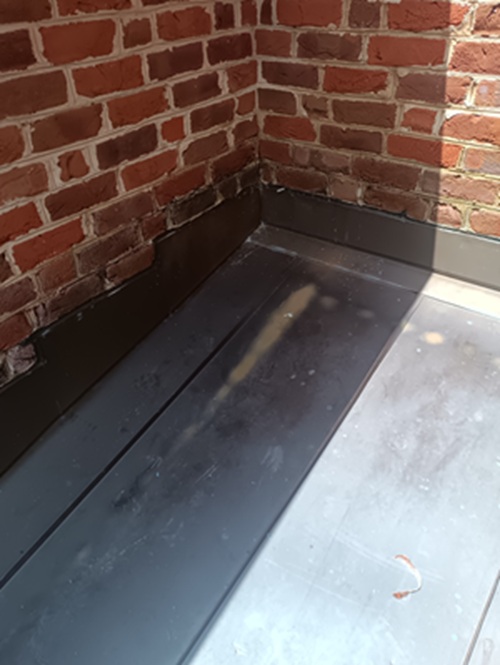

Counter flashing is a secondary layer of flashing installed over base flashing to protect the area where a vertical surface meets a sloped roof. Its primary function is to prevent water from working its way behind the base flashing and into the building’s structure. While base flashing forms the first line of defense at roof-to-wall intersections, counter flashing acts as a cap over it, sealing off the top edge and directing water away from the joint entirely.
It is important to understand how counter flashing differs from other types of flashing used in roofing. Base flashing is embedded into the roofing system from below, while counter flashing is secured into the wall from above, overlapping the base flashing to create a two-part system. Step flashing, by comparison, is an L-shaped piece of metal installed beneath individual shingles along a wall. Counter flashing covers the vertical portion of that assembly, completing the waterproofing barrier. Without both components working together, the intersection remains vulnerable.
Counter flashing is most commonly used around chimneys, along sidewalls and headwalls, and at dormers where a vertical wall intersects with the roof plane. It is especially critical at brick and masonry surfaces, where water that penetrates mortar joints can cause significant damage to both the roofing system and the underlying structure.
What is the Purpose of Counter Flashing?
Water does not need a large opening to cause severe damage. Even a small gap at a roof-to-wall junction can allow moisture to travel into the roof deck, wall cavity, and insulation over time. Counter flashing closes off the top edge of the base flashing, so water running down a vertical surface is redirected onto the roof and into the drainage system rather than behind the flashing.
Improper installation is one of the most common causes of roofing failures at wall intersections. A frequent shortcut involves relying on caulk or sealant alone without proper mechanical fastening or embedment into the wall. Sealant is not a permanent solution because it dries, shrinks, and cracks with seasonal temperature changes, eventually leaving gaps where moisture can enter. When counter flashing sections are properly set into mortar joints or cut grooves in masonry and then sealed, the assembly is far more resilient than sealant alone.
Over the long term, professionally installed counter flashing reduces the likelihood of rot in roof sheathing, mold growth inside wall assemblies, and interior water staining. It also reduces the frequency of repairs needed at these high-risk transition points, which translates directly to lower maintenance costs over the life of the roof.
Materials Used in Counter Flashing
The material selected for counter flashing affects both its performance and its longevity. The most widely used options are aluminum, copper, galvanized steel, stainless steel, and PVC.
Aluminum is lightweight, corrosion-resistant, and easy to shape, making it a practical and cost-effective choice for most residential applications. Galvanized steel offers strong durability and affordability, though it requires a proper protective coating to prevent rust over time, particularly in areas with high moisture exposure. Copper is considered a premium option because of its exceptional longevity and resistance to corrosion, and it develops a natural patina that many homeowners find visually appealing. However, copper comes at a significantly higher cost than other materials. Stainless steel provides excellent resistance to corrosion and is well suited to regions with extreme weather conditions. PVC is a synthetic option that is easy to install and maintain, though it is generally less durable than metal alternatives and is better suited to lower-demand applications.
When selecting a material, it is important to consider the local climate, the type of wall surface the flashing will be attached to, and the overall roofing material in use. Using incompatible metals can lead to galvanic corrosion, so material compatibility is a necessary consideration during both specification and installation.
FAQ’s: Counter Flashing
Our most frequently asked questions about counter flashing:
What are the signs of failing counter flashing?
Several warning signs indicate that counter flashing may be failing. Visible rust or corrosion on metal flashing means the protective barrier has been compromised. Loose or missing sections allow water to get behind the flashing immediately. Cracked or dried-out sealant at the joints is a common early indicator of a problem, particularly at masonry surfaces. Interior water stains on walls or ceilings near chimneys or dormers often point to a flashing failure, even when the source is not immediately obvious from the exterior.
How long does counter flashing last?
The lifespan of counter flashing depends heavily on the material and the quality of installation. Aluminum and galvanized steel counter flashing typically lasts between 20 and 30 years when professionally installed and maintained. Copper counter flashing has one of the longest lifespans in roofing, often lasting 50 years or more. Routine inspections and timely sealant replacement can extend the functional life of any flashing system regardless of material.
Is counter flashing necessary?
Counter flashing is a necessary component of any properly constructed roof-to-wall intersection. Building codes, including the International Residential Code, include requirements for flashing at these transition points, and the National Roofing Contractors Association provides detailed installation standards that address counter flashing specifically. Without it, the top edge of the base flashing is left exposed, and water infiltration is a matter of time rather than possibility.
Contact DaBella for Your Next Roof Replacement Project
When it comes to protecting your home, the details matter as much as the big picture. DaBella is a GAF Master Elite roofer, a distinction held by only the top 3% of roofing contractors in the country, which means our installations meet the highest standards in the industry. We install GAF HDZ asphalt shingles, one of the most advanced shingle products on the market, engineered for enhanced wind resistance and a stronger nailing zone. Every component of your roof, including critical waterproofing elements like counter flashing, is installed with the precision and care your home deserves.
Our work is backed by an industry-leading warranty that gives homeowners lasting confidence in their investment. When you choose DaBella, you are choosing a team that understands how every part of a roofing system works together to keep your home protected for decades to come. Whether you are replacing an aging roof or addressing years of deferred maintenance, our team is ready to walk you through the process from start to finish. To schedule your roof replacement consultation, contact DaBella today at 844-DaBella.