
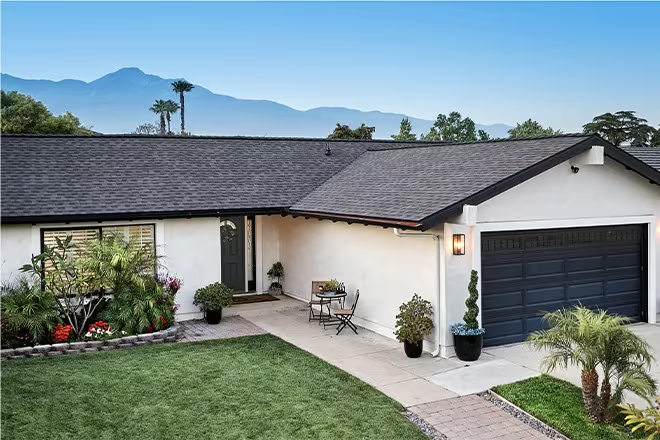
If you have ever touched a dark-colored roof on a hot summer day, you already understand the problem that cool roofs are designed to solve. Conventional roofing materials absorb a significant amount of solar energy, which transfers heat into the building below and contributes to higher energy bills, reduced indoor comfort during summer months, and elevated outdoor temperatures in densely developed areas.
A cool roof addresses this problem through science-backed material choices and coatings that reflect sunlight and release heat more efficiently. For homeowners and building owners considering a roof replacement, understanding what a cool roof is and how it works can lead to meaningful long-term savings and environmental benefits.
Cool Roofs: What Are They & Why They Work
A cool roof is engineered to do something a standard roof cannot: actively work against heat buildup rather than contribute to it. Where a conventional roof absorbs solar energy and drives up the temperature inside your home, a cool roof is designed to reflect that energy away before it becomes a problem.
The science behind cool roofs comes down to two measurable properties. The first is solar reflectance, which is the percentage of sunlight a surface bounces back rather than absorbs. The second is thermal emittance, which measures how effectively a surface sheds the heat it does take in. When these two properties are evaluated together, they produce a score known as the Solar Reflectance Index, or SRI. The higher the SRI, the better the roof performs as a cool roofing system.
To put that into practical terms, a dark asphalt shingle roof on a hot sunny day can reach surface temperatures of 150 degrees Fahrenheit or more. A comparable cool roof under the same conditions can run significantly cooler, which means far less heat is working its way through your roof deck and into your living space. Your air conditioning system does not have to work nearly as hard, and that shows up directly on your energy bill.
It is also worth noting that cool roofs are not defined by a single material or product type. Reflective shingles, specialty coatings, and certain metal roofing systems can all qualify. What they share is performance, not appearance. A roof earns the cool roof designation based on how it measures up against SRI standards, which gives homeowners meaningful flexibility in choosing a product that fits both their energy goals and their aesthetic preferences.
Benefits of Cool Roofs
A cool roof delivers benefits that go well beyond just protecting your home from the elements. From lower energy bills and improved indoor comfort to reduced environmental impact, the advantages make a compelling case for homeowners who are considering a roof replacement.
Energy Savings and Reduced Cooling Costs
By reducing the amount of heat that enters a building through the roof, cool roofs lower the demand on air conditioning systems. According to the EPA, cool roofs can reduce peak cooling demand by 11 to 27 percent in air-conditioned residential buildings. For homeowners, this translates to measurable reductions in monthly utility bills, particularly in warm or hot climates where air conditioning runs for extended periods throughout the year.
Improved Indoor Comfort
Buildings with unconditioned spaces, such as garages, warehouses, or certain commercial structures, benefit significantly from cool roofs because the reduction in heat transfer directly lowers indoor temperatures even without air conditioning. In conditioned buildings, cool roofs help stabilize temperatures and reduce hot spots near the ceiling level.
Environmental Benefits
Reduced energy consumption means reduced demand on power plants, which leads to lower greenhouse gas emissions. Cool roofs also directly address the urban heat island effect, in which developed urban areas become significantly warmer than surrounding rural areas due to heat-absorbing surfaces like roads, buildings, and conventional roofing. By replacing heat-absorbing roofing with reflective materials, cool roofs help lower ambient outdoor temperatures in densely populated areas, which benefits entire communities.
Types of Cool Roofs
Cool roof technology is available across multiple roofing categories, making it adaptable to a wide range of building types and roof configurations.
Reflective Shingles
Asphalt shingles treated with specialized reflective granules are among the most common cool roofing options for residential properties. Products like the GAF Timberline HDZ Reflector Series use advanced granule technology to reflect infrared solar energy while maintaining the traditional aesthetic of a shingle roof. These products are available in a wide range of colors, meaning homeowners do not have to sacrifice curb appeal to gain energy efficiency.
White and Light-Colored Roofs
White roofs and light-colored single-ply membranes are commonly used in commercial and low-slope applications. White and near-white surfaces achieve the highest solar reflectance values, making them highly effective in climates with significant solar exposure. Thermoplastic polyolefin (TPO) and polyvinyl chloride (PVC) membranes are widely used examples.
Reflective Coatings
Reflective coatings can be applied over existing roofing materials, including metal, built-up roofing, and modified bitumen systems. These coatings typically contain reflective pigments or elastomeric compounds that increase both solar reflectance and thermal emittance. They offer a cost-effective way to convert an existing roof into a cool roof without full replacement.
When to Consider Installing a Cool Roof
Several indicators suggest that a cool roof may be a strong fit for your property. Homes located in regions with warm or hot climates and extended cooling seasons stand to benefit the most. If your current roof is approaching the end of its service life, a cool roof replacement is a smart opportunity to improve energy performance at the same time. High summer energy bills and significant cooling costs are also strong signals that a reflective roofing system could deliver meaningful savings. Homes with limited attic insulation or ventilation are particularly good candidates, as heat from the roof transfers into the living space more readily in those conditions. If you are constructing a new home, incorporating a cool roof from the start is one of the most cost-effective ways to optimize long-term energy performance.
Cool roofs are effective in most climates, but they deliver the greatest financial return in regions where air conditioning demand is high. In colder climates, the tradeoff is worth evaluating carefully. If the annual heating penalty from reduced heat absorption in winter exceeds the annual cooling savings, the net energy benefit diminishes. That said, improvements in insulation and building envelope performance often offset this concern.
Many local governments, utilities, and state energy agencies offer incentives for cool roof installation, including rebates, tax credits, and expedited permitting. Programs vary by region, so checking with your local utility provider or energy office before installation is a worthwhile step.
Cost and Energy Savings
The upfront cost of a cool roof depends on the material chosen, the size and complexity of the roof, and the specific product line selected. According to the U.S. Department of Energy, cool roofing products usually cost no more than comparable conventional roofing products, making the energy efficiency gains an accessible upgrade rather than a premium one.
The long-term savings picture is compelling. Homeowners in hot climates can see annual energy savings that, over the life of the roof, far exceed any premium paid for reflective materials. A California study cited by the DOE found that cool roofs provide an average yearly net savings of nearly 50 cents per square foot when accounting for energy savings, reduced cooling equipment costs, and long-term material savings. When factoring in available rebates and incentives, the return on investment strengthens further.
When evaluating cool roof products, the Cool Roof Rating Council maintains a rated products directory that reports the solar reflectance and thermal emittance values of thousands of roofing products. This is the current industry standard for comparing product performance and is a reliable resource for homeowners and contractors selecting materials. Tax credits and rebate eligibility vary by program, state, and utility provider, so checking with your local energy office or a tax professional before installation is the best way to understand what incentives may be available to you.
Climate Impact and Environmental Considerations
Cool roofs contribute to broader climate goals in two ways: by reducing energy consumption at the building level and by mitigating the urban heat island effect at the community level.
When buildings require less air conditioning, power plants generate less electricity, which reduces the combustion of fossil fuels and the associated emissions of carbon dioxide and other greenhouse gases. Widespread adoption of cool roofs across urban areas has the potential to reduce local temperatures measurably by decreasing the amount of solar energy that is converted to heat in the built environment.
The urban heat island effect is a documented phenomenon in which cities and suburban areas are consistently several degrees warmer than surrounding rural areas. Conventional roofing, paving, and infrastructure absorb and retain heat throughout the day and release it at night, keeping urban temperatures elevated. Cool roofs, when adopted at scale, help counteract this effect by reflecting solar energy rather than converting it to heat at the surface.
From a materials sustainability standpoint, long-lived roofing products that require less frequent replacement also reduce the environmental burden associated with manufacturing and disposing of roofing materials. Selecting a durable, reflective product with a long warranty supports both energy efficiency and material sustainability goals.
Frequently Asked Questions About Cool Roofs
Our most frequently asked questions regarding cool roofs and how they may be beneficial for their homes:
What is the difference between a cool roof and a regular roof?
A regular roof, particularly one made from dark asphalt shingles, absorbs a substantial portion of the solar energy that hits its surface and converts that energy into heat. A cool roof is designed with materials or coatings that reflect more sunlight and release absorbed heat more efficiently. The practical result is a roof surface that stays significantly cooler during hot weather, which reduces heat transfer into the building and lowers cooling costs.
Do cool roofs really work?
Yes. Cool roofs have been studied extensively by agencies including the U.S. Department of Energy, Lawrence Berkeley National Laboratory, and the EPA. Research consistently shows that cool roofs reduce roof surface temperatures by 50 degrees Fahrenheit or more compared to conventional materials, lower peak cooling energy demand by 11 to 27 percent in residential homes and contribute to reduced urban heat island effects. The performance of any specific product depends on its solar reflectance and thermal emittance ratings, so reviewing Cool Roof Rating Council certifications is recommended when selecting materials.
What is the difference between a green roof and a cool roof?
A green roof uses layers of soil and vegetation to insulate a building, manage stormwater, and provide environmental benefits. A cool roof achieves its benefits through reflective materials or coatings that reduce heat absorption. Green roofs require structural support for the added weight and ongoing maintenance of the plant systems. Cool roofs are generally applicable to a wider range of building types and do not require the same structural considerations. Both offer environmental benefits, but through different mechanisms.
Is a cool roof tax deductible?
Cool roofs may qualify for utility rebates or state incentives depending on your location and the product selected. Federal tax credit eligibility for roofing products has changed in recent years, so consulting a tax professional or reviewing current IRS guidelines before installation is strongly recommended. Many local utilities also offer rebates independent of any federal programs, and checking with your utility provider directly is a practical first step.
Learn More About DaBella’s Cool Roof Options
DaBella is proud to offer roofing solutions that combine durability, energy performance, and curb appeal. As a GAF Master Elite Roofing Contractor, one of the highest designations GAF awards to roofing professionals, DaBella delivers installations backed by industry-leading craftsmanship standards and enhanced warranty coverage.
Our cool roof offerings include the GAF Timberline HDZ Reflector Series, a high-performance reflective shingle line engineered to reduce heat absorption while maintaining the dimensional look of a premium architectural shingle. The HDZ Reflector Series is available in a wide range of colors, giving homeowners the flexibility to choose a style that complements their home without compromising energy efficiency.
Whether you are considering a full roof replacement or exploring your options for the first time, our team is ready to help you understand what cool roofing can do for your home and your energy bills. Contact DaBella today at 844-DaBella to speak with a roofing specialist and schedule your consultation.