
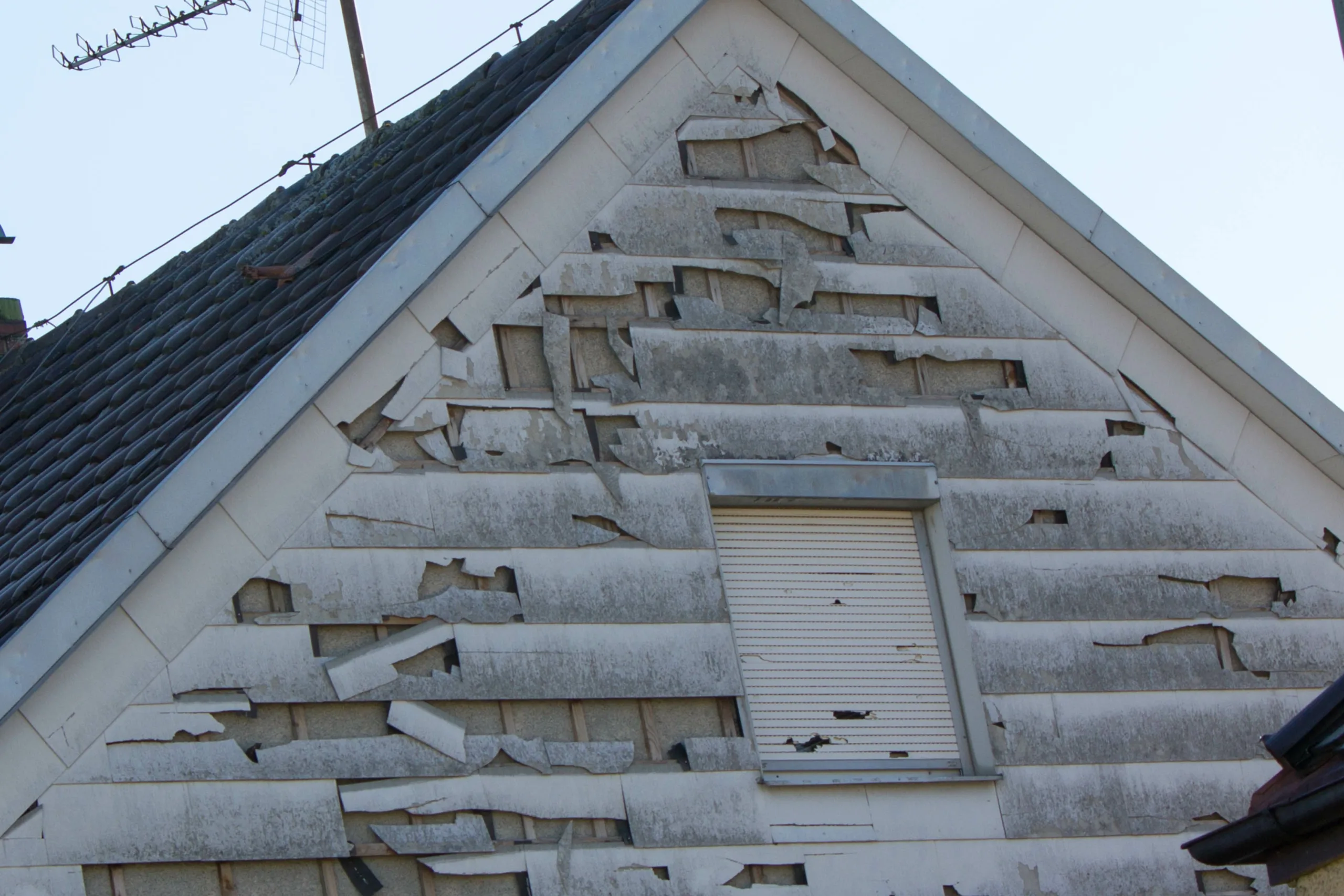
Hail damage to siding can be a major issue, especially for homeowners living in areas where hail is more common. Hail can affect your roof, siding, windows, or any other exterior surface if the hail is large enough. It could also be a clever idea to check the interior of your home as well, including your ceilings and walls, to see if there are any signs of water damage. The hard pebbles of ice can range in size from a pinhead to a softball, and when it hits the siding of a home, it can cause cracks, chips, and if large enough can leave holes in the siding that can be awfully expensive to fix. Additionally, if left unrepaired for long enough, hail damage to siding can lead to moisture buildup and eventual water damage if not taken care of quickly.
Hail damage to siding can be a huge issue, both structurally and aesthetically. As siding is an important barrier that protects your home from the elements and keeps pests and vermin out, it is imperative that you take any damage very seriously. The most common issue with hail damage is the damage it can cause to vinyl siding, although all types of siding are susceptible. Vinyl siding can become cracked or split, leading to water and air infiltration that could cause a wide range of other problems.
Why you Should Act Quickly if Experiencing Hail Damage.
It is important to act quickly if you believe that your home has sustained hail damage. The first step is to inspect the exterior of your home for any signs of damage. If you find any, it is important to document the damage with photos or video so that you have proof when filing an insurance claim.
You should inspect all aspects of your home’s exterior including your roof, siding, windows, etc. Some signs of damage could not be noticeable at the first glance. However, if you do notice that one aspect of the exterior of your home was damaged chances are that another part of your exterior was also damaged.
Hail damage to siding is not only unsightly, but it can also be extremely expensive to repair. The cost of repairing or replacing siding can range from a few hundred to a few thousand dollars, depending on the severity of the damage. If left unrepaired, hail damage to siding can lead to further damage to your home, such as water damage, mold, and insect infestation. It is also sometimes common to feel drafts as some of the warm air gets replaced with cool air due to the dents, cracks, or gaps from your siding. Therefore, it is important to have any hail damage to your siding repaired as soon as possible to avoid further damage and expense. The damage that can be done by hail to your siding can be extensive and expensive to repair. This will not only ruin the aesthetic of your home but can also lead to serious problems.
Hail Damage to Vinyl Siding
Unlike metal, wood and fiber cement siding, vinyl siding is particularly vulnerable to hail damage. This is often due to the softer material that is used in the manufacturing of the siding, making it more prone to cracking, chipping, or splitting. To make matters worse, hail damage to vinyl siding can be harder to detect, as it can appear as a small, barely noticeable blemish, but can grow rapidly if not taken care of. For this reason, it is important to be vigilant in checking for potential damage after a storm has passed and proper repairs should be made as soon as possible to prevent further damage.
Hail Damage to James Hardie Fiber Cement Siding
James Hardie fiber cement siding is an excellent choice for homeowners looking to avoid hail damage. This type of siding is strong and durable, and much less likely to suffer from any kind of hail damage. It is also easy to repair if insignificant amounts of hail damage do occur, since the individual panels are designed to be easily replaced. In addition to its hail resistance, James Hardie fiber cement siding looks great, comes in a variety of colors, and can last up to 50 years if properly maintained. The importance of protecting your home from hail damage cannot be overstated, so make sure to take the necessary steps to ensure that your home is protected from any potential damage.
Hail Damage to Metal Siding
Metal siding can also be susceptible to hail damage. While it is a much more durable material than vinyl, it can still suffer from dents in the metal as well as corrosion from the moisture from the hail. It is important to inspect your metal siding regularly to look for any potential damage. In addition, any repairs that are necessary should be done as soon as possible to avoid any further deterioration of the siding.
Hail Damage to Wood Siding
Wood siding is also prone to hail damage, but it can be more difficult to detect because of the natural look of the wood. If you notice that there are dents in the wood, it could be a sign of hail damage. It is important to inspect the wood siding and make repairs as needed. The repairs may vary depending on the severity of the damage.
Hail Damage to Aluminum Siding
Aluminum siding is also vulnerable to hail damage, but it is often easier to detect due to the visible dents and cracks in the metal. These can be easily seen if the aluminum siding is smooth, while textured aluminum siding may require a closer inspection to detect the damage done from hail. An effortless way to spot aluminum siding is by looking hard in between the siding panels to see if there are any gaps in the material. Chipping and cracks can be easily spotted by spraying water with a hose to reveal the damaged siding.
Oxidation marks can also be a sign of hail damage to aluminum siding. These marks may appear as small spots on the aluminum but can spread over time if not taken care of. If you notice oxidation marks on your siding, it is important to address them quickly to prevent further damage to your siding. Oxidation of aluminum could be a clear sign that it could be time to replace your siding. To check for oxidation, you can run your hand on your aluminum siding, if there is a chalky residue on your hand or if you are able to feel dimples on your siding, this is a clear sign that the siding has become oxidized.
Hail Damage to Siding Insurance Claims
If you have sustained hail damage to your siding, it is important to check your insurance policy to see if you are covered. Depending on your policy, you may be able to make an insurance claim for any damage that has occurred. It is important to make sure that any repairs are properly documented, so that you can be reimbursed for the damage. If you are unsure of the extent of the damage, contact a professional contractor to assess and document the damage for you.
It is important to note that hail damage to siding is not always covered by insurance. It is important to check with your insurance provider to see what type of coverage is available for hail damage and to make sure you have the necessary coverage in place. If you do have a claim, it is important to have a professional inspect and document the damage as soon as possible. This can help speed up the claims process and get you the repair money you need as quickly as possible.
FAQ’s: Siding Damage from Hail
How Big Does Hail Need to Be to Damage Siding?
There is no single size that guarantees damage, because hail does not work alone. Three-quarters of an inch is generally the point at which siding becomes vulnerable, but that number shifts depending on what accompanies the storm. A hailstone that size falling straight down in calm conditions behaves very differently than one being driven sideways by 60-mile-per-hour winds. The angle of impact, the density of the stone, and the condition of the siding all factor into the outcome as much as diameter does. Older siding that has already been weakened by UV exposure, previous impacts, or temperature cycling will show damage at smaller hail sizes than newer material in good condition. Once hail reaches one inch, visible damage becomes far more likely across most siding materials. At one and a half inches and above, the conversation shifts from whether there is damage to how extensive it is.
What Does Hail Damage on Siding Look Like?
The most misleading thing about hail damage on siding is that it does not always announce itself. Some of the most consequential damage is subtle enough that homeowners walk past it without a second look. What to watch for varies by material. On vinyl, look for cracks, chips, or small fractures at points of impact, particularly on older panels that have lost flexibility. These marks tend to appear in a scattered, random pattern rather than in any organized line or grid, which is one way to distinguish storm damage from other causes. On wood siding, hail often shows up as denting, paint loss, or splitting along the grain. Metal siding tends to dent clearly on impact, and those dents may disrupt how water runs down the surface. One practical inspection tip is to look in the late afternoon when lower-angle sunlight casts shadows that make shallow dents and cracks far easier to spot. Homeowners should also check trim, fascia, and window surrounds at the same time, since these surfaces often show damage that confirms what may be harder to see on the siding panels themselves.
Can Vinyl Siding Be Damaged by Hail?
Vinyl siding is among the most hail-susceptible siding materials available, and the timing of the storm has a lot to do with how badly it fares. Vinyl is a thermoplastic, meaning its behavior changes with temperature. In cold conditions, it becomes rigid and brittle, which makes it significantly more prone to cracking on impact. The same hailstone that leaves a minor mark on vinyl in summer conditions could fracture a panel cleanly in freezing temperatures. Panel thickness is another variable that matters more than many homeowners realize. Higher-grade vinyl products are thicker and absorb impact more effectively than entry-level options. Age plays a role too, as vinyl that has been through years of temperature cycling and sun exposure loses flexibility over time and becomes more vulnerable even in moderate conditions. Any damage to vinyl siding, regardless of how minor it looks on the surface, should be inspected and addressed promptly. Even a hairline crack gives water a pathway behind the panel, and moisture intrusion behind siding can cause far more expensive problems than the storm damage that created the opening.
Consider New Siding Replacement with DaBella
If you have siding on your home over 20 years of age and have experienced damage from extreme weather, it may be time to consider a siding replacement with DaBella. We use products such as James Hardie fiber cement siding.
Fiber cement siding has incredible benefits and is known to be extremely durable and long-lasting, making it the perfect choice for anyone looking to improve the look and condition of their home’s exterior. This kind of siding provides a great level of protection against hail damage and other extreme weather conditions, ensuring that your home remains in pristine condition for many years to come. Additionally, DaBella is a certified installer of James Hardie siding, meaning that you can rest assured that your home is in the best hands when it comes to making sure your home looks its absolute best. Whether your home needs repairs to existing siding or a full replacement with James Hardie siding, you can now have the peace of mind knowing that your home is protected against the elements and will look great for years to come.
DaBella is a leading provider of home improvement services including siding, roofing, windows and bath and shower replacements. We have completed thousands of jobs in the last year and have built a formidable reputation for providing quality craftsmanship and superior customer service. We specialize in James Hardie fiber cement siding, and our dedicated team of professionals have the knowledge and expertise to make sure your home looks its best. In addition, we provide free in-home consultations so that you can discuss your needs and get an idea of what kind of work needs to be done. We look forward to helping you make your home look like new again and protecting it against hail damage and other extreme weather conditions. Contact DaBella today at 844-DaBella to schedule your free no-obligation estimate for your next home improvement project.