
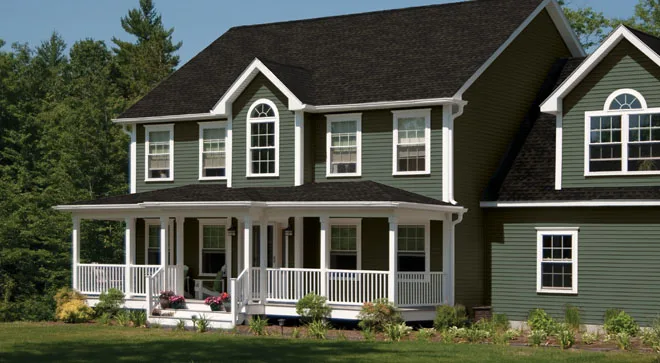
Vinyl siding is one of the most popular exterior options for homeowners thanks to its durability, limited maintenance, and wide range of styles. What many homeowners do not realize is that vinyl siding comes in different grades, each offering various levels of strength, performance, and long-term value. These differences can directly affect how your home looks, how well it holds up to weather, and how long it lasts. Knowing what sets each grade apart can help you make a more informed choice before selecting a product.
Vinyl Siding Grades
Vinyl siding grades are categorized by thickness, material quality, and performance characteristics. The industry recognizes multiple tiers ranging from builder’s grade to premium, with thickness serving as the primary differentiator. The American Society of Testing and Materials (ASTM) requires a minimum thickness of 0.035 inches for residential vinyl siding.
Thickness directly impacts durability, impact resistance, and longevity. Thicker panels resist warping and cracking, particularly in extreme temperatures. They maintain structural integrity better in high winds, provide superior color retention through enhanced UV stabilizers, and feature stronger interlocking systems that minimize panel movement during storms. Premium options may include insulated backing that improves thermal performance and reduces exterior noise transmission.
The Different Grades of Vinyl Siding
Builder’s/Economy Grade (0.035–0.040 inches)
The most affordable option, meeting minimum ASTM standards. This grade works for budget-conscious projects, rental properties, or mild climates with minimal weather extremes. However, it is more susceptible to cracking in cold weather, warping from heat, and shows underlying wall imperfections. Expected lifespan: 10–20 years with proper maintenance.
Standard/Mid-Range Grade (0.042–0.046 inches)
Offers balanced performance for most residential applications. This thickness provides adequate impact resistance, better wind performance than builder’s grade, and broader color selections. It accommodates various climates reasonably well and represents the most popular choice among homeowners. Expected lifespan: 20–40 years.
Premium Grade (0.048–0.052+ inches)
The highest quality residential siding available. Features maximum thickness for superior rigidity, enhanced UV protection formulations, reinforced nail hems for secure attachment, and deeper profile designs that create more authentic wood-like shadows and texture. Often includes optional insulated backing. Best suited for harsh climates, high-wind zones, hail-prone regions, or projects prioritizing maximum curb appeal and longevity. Expected lifespan: 40–60 years.
Material Composition
All vinyl siding is manufactured from PVC (polyvinyl chloride), typically comprising 80% PVC resin with the remaining 20% consisting of additives for color, UV resistance, flexibility, and impact strength. Premium formulations use higher-quality pigments and UV stabilizers. Manufacturing involves co-extrusion, creating a weatherable capstock layer (up to 25% of total thickness) containing titanium dioxide for UV protection, over a substrate layer containing ground limestone for structural support.
Practical Applications
Builder’s grade suits temporary installations or properties in consistently mild climates. Standard grade handles most residential needs in average weather conditions. Premium grade is recommended for coastal areas, mountain regions, tornado-prone zones, or anywhere extreme weather poses significant risk to exterior materials.
Factors Influencing Vinyl Siding Grades
Premium-grade siding comes from manufacturers with advanced extrusion processes, consistent thickness control, and comprehensive testing protocols. Products meeting or exceeding ASTM D3679 standards undergo certification by independent agencies such as Intertek, which conducts biannual testing and unannounced plant inspections. The Vinyl Siding Institute (formerly Polymeric Exterior Products Association) administers a product certification program that verifies compliance with industry benchmarks. Quality manufacturing ensures panels maintain dimensional stability, interlock securely, and resist environmental degradation throughout their service life.
UV exposure causes fading and material embrittlement over time. Premium formulations incorporate higher concentrations of UV stabilizers and titanium dioxide within the capstock layer for superior color retention. Cold-temperature impact resistance matters in northern climates where brittle materials crack easily. Coastal and high-wind regions demand stronger interlocking mechanisms and reinforced nail hems to prevent panel blow-off. Thickness correlates with performance—thicker profiles (0.046+ inches) withstand impact, temperature fluctuations, and storm conditions better than thinner options. All certified vinyl siding must meet a minimum 110 mph wind resistance rating, though premium products often achieve 200+ mph ratings when properly installed.
Material costs increase with grade, with premium siding typically costing 30-50% more than builder’s grade. However, superior durability, reduced maintenance requirements, longer warranties, and better color retention can lower total ownership costs over the product’s lifespan. Regional climate conditions should inform your budget decisions—investing in premium siding makes economic sense in harsh weather zones, while moderate climates may not require top-tier performance.
Performance Specifications to Evaluate
UV Protection: Verify fade-resistance technology (look for through-body color or enhanced capstock formulations) and warranty coverage for color change. Premium warranties guarantee against excessive fading for 25+ years.
Wind Rating: Check ASTM D3679 wind load ratings and design features such as reinforced nail hems and enhanced locking systems. Standard certification requires 110 mph resistance, but high-wind products achieve 150-240 mph ratings depending on thickness and installation method.
Impact Resistance: Thicker panels (0.046+ inches) and insulated backing systems improve resistance to hail, debris, and mechanical impact. Some premium lines achieve Class 4 impact ratings—the highest available for residential siding.
Warranty Terms: Compare coverage for fade resistance, wind damage, hail impact, and manufacturing defects. Premium products typically offer transferable lifetime warranties, while builder’s grade may provide only 10-20 years of coverage.
How to Choose the Best Grade for Your Home
Your homeownership timeline should inform your siding investment. If you plan to stay long-term and value low maintenance with strong curb appeal, mid-range or premium grades deliver better lifetime value despite higher initial costs. Conversely, short-term owners or investors’ flipping properties may find builder’s grade adequate for immediate resale, though this decision should align closely with regional climate realities.
Climate is the primary driver of material selection and grade selection and directly impacts how your budget translates into performance. Harsh environments—those with intense UV exposure, extreme temperature swings, high winds, or frequent hail—demand premium-grade siding (0.048+ inches thick) featuring enhanced UV stabilizers and reinforced construction details. Moderate climates with typical seasonal variation accommodate mid-range options (0.042–0.046 inches) effectively, while only consistently mild regions without severe weather can justify builder’s grade. Thickness correlates directly with durability: thicker panels resist thermal expansion and contraction better, maintaining structural integrity through temperature fluctuations that cause thinner products to warp or crack. Understanding these climate-specific requirements and how they interact with different siding grades often requires expert guidance to make the right choice.
Experienced contractors evaluate your specific conditions—climate zone, architectural style, wind exposure, and sun orientation—then recommend products matched to those factors. They compare profile options like Dutch lap, board-and-batten, and vertical panels while explaining manufacturer warranty differences that are not always obvious from product literature. Beyond product selection, professional installation is critical for achieving rated performance. Proper technique requires centering nails in slots with 1/32-inch clearance (approximately a dime’s thickness) to allow expansion and contraction, maintaining 16-inch nail spacing on horizontal panels (reduced to 8–12 inches in high-wind zones), leaving 1/4-inch expansion gaps at panel ends when installing in temperatures above 40°F (increased to 3/8-inch below 40°F), and ensuring level alignment from starter strips through finishing trim. Installation errors—tight nailing, improper spacing, inadequate expansion gaps—cause rippling, buckling, and premature failure regardless of siding grade quality. These technical considerations inform how different grades match specific environmental conditions.
Criteria for Vinyl Siding
Premium-grade siding is essential for severe weather zones including coastal areas, tornado and hurricane belts, and mountain regions with extreme cold. Mid-range products suit typical residential conditions with moderate seasonal variation. Builder’s grade should only be considered for consistently mild climates or temporary applications where longevity is not prioritized. Within these grade categories, additional features like insulation can further enhance performance and justify higher investment.
Foam-backed premium products add R-2 to R-4 thermal resistance, reducing energy costs by 10-15% through continuous insulation that eliminates thermal bridging at wall studs (which account for roughly 25% of wall surface area). Beyond energy savings, insulated siding provides up to 40% exterior noise reduction, 5x greater impact resistance compared to hollow-back panels, and improved panel rigidity that prevents sagging between fasteners. While insulated siding costs 20-50% more than standard products, it delivers measurable performance improvements in energy efficiency, comfort, and durability. Once you have determined the appropriate grade and insulation level for your performance needs, aesthetic considerations help finalize your selection.
Different profiles create varied shadow lines and visual characteristics. Horizontal lap remains most common, Dutch lap adds a decorative groove for traditional homes, board-and-batten offers vertical plank patterns popular in farmhouse styles, and vertical panels suit contemporary architecture. Profile choice does not affect grade performance or durability but significantly impacts your home’s appearance and how well the siding complements your architectural style. Regardless of aesthetic preferences and performance specifications, every installation must satisfy regulatory requirements.
Local building codes and wind load requirements specific to your area determine minimum acceptable standards for siding products. While minimum ASTM D3679 certification requires 110 mph wind resistance, many areas mandate higher ratings for high-wind zones—particularly coastal regions and areas prone to severe storms. Confirming code compliance before purchase prevents costly replacements and ensures your siding performs safely in local conditions, bringing together all the practical, performance, and regulatory considerations that inform a successful siding selection.
FAQs: Vinyl Siding Grades
Our most frequently asked questions regarding the different grades of vinyl siding.
What is the best grade of vinyl siding?
Premium-grade vinyl siding delivers superior performance across all metrics. With thickness ranging from 0.048–0.055 inches, it provides maximum durability, enhanced wind resistance (often rated to 150-200+ mph), advanced UV protection for fade resistance, and reinforced construction features like full rollover nail hems and larger interlocking mechanisms. For homes in demanding climates—particularly areas with high winds, hail, extreme temperatures, or intense UV exposure—or for homeowners prioritizing longevity and minimal maintenance, premium grade represents the optimal investment despite higher upfront costs.
What is the best type of vinyl siding?
Insulated vinyl siding combines premium-grade panels with contoured foam backing, making it the highest-performing residential option. The foam layer adds R-2 to R-4 thermal resistance, improving energy efficiency by 10-15% while eliminating thermal bridging at wall studs. Additional benefits include up to 5x greater impact resistance compared to hollow-back panels, approximately 40% reduction in exterior noise transmission, and enhanced panel rigidity that prevents sagging between fasteners. Profile selection depends on architectural style: Dutch lap suits traditional homes with its decorative groove creating pronounced shadow lines, while board-and-batten delivers a modern farmhouse aesthetic with vertical plank patterns.
What is the difference between standard and premium vinyl siding?
Standard (builder’s grade) vinyl measures 0.035–0.042 inches thick, features single-layer nail hems, basic interlocking systems, and typically carries a 20 year warranty. Premium vinyl (0.048+ inches) uses thicker panels with full rollover nail hems that double the hem thickness to better disperse wind load pressure. Premium products incorporate higher concentrations of UV stabilizers and titanium dioxide in the capstock layer for superior fade resistance, feature larger upper and lower lock areas that create stronger panel connections, and offer deeper shadow lines mimicking authentic wood texture. Premium warranties typically provide transferable lifetime coverage with stronger guarantees against color fade, wind damage, and hail impact.
How does vinyl siding thickness impact performance?
Thickness directly correlates with structural performance across multiple factors. Thicker panels (0.046+ inches) demonstrate greater rigidity, resisting warping from temperature fluctuations and maintaining flat profiles on walls. Impact resistance improves significantly—thicker siding better withstands hail, wind-borne debris, and accidental contact without cracking or denting. Wind resistance increases because thicker material combined with reinforced nail hems and enhanced locking mechanisms resist the negative pressure differential that creates suction between siding and exterior walls during storms. Professionally installed premium vinyl (0.048+ inches) with full rollover nail hems can withstand winds exceeding 200 mph, while standard grade typically rates to 110 mph. When evaluating products, consider thickness alongside ASTM D3679 certification, wind load ratings, UV protection technology, and comprehensive warranty terms for complete quality assessment.
Get a Free Quote on Your Next Siding Replacement Project
Give your home a stronger, more durable exterior with professional siding replacement services from DaBella with only the best materials including Alside vinyl siding, James Hardie fiber cement siding, and TandoStone siding. With years of hands-on experience and certified crews, we install siding systems designed to hold up to your local climate while improving curb appeal and long-term performance.
As a James Hardie Elite Preferred Contractor, our team follows strict installation standards to help your siding last as long as it should. From material selection to final inspection, every step is handled with care and attention to detail.
Contact us today at 844-DaBella today to schedule a free, no-obligation siding replacement estimate. One of our siding and home improvement experts will review your home’s needs, discuss material options, and provide clear pricing so you can plan your project with confidence.